 Parcelles
Montagne de Reims
Pinot Noir's historic stronghold.
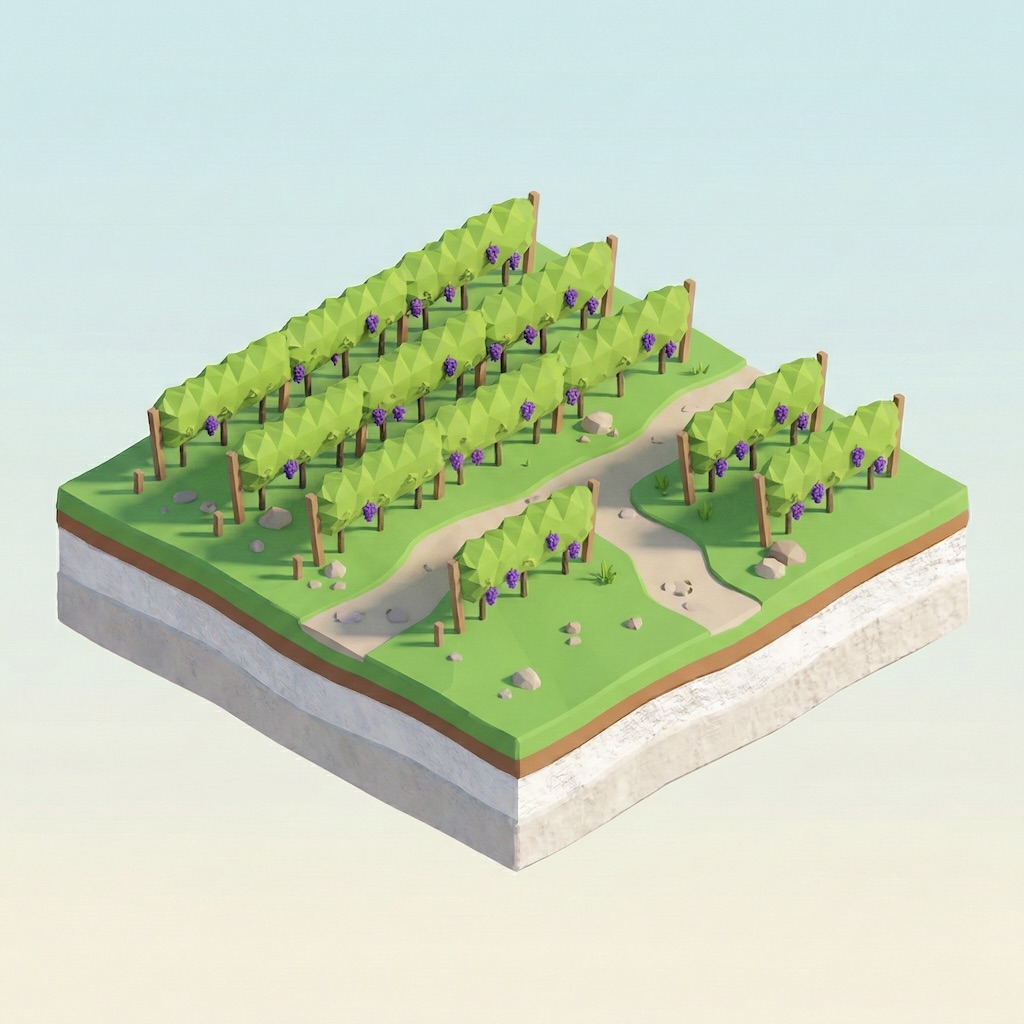
The Montagne de Reims is the largest of Champagne's subregions and the centre of its Pinot Noir production. It runs in a wide arc through the forest between Reims to the north and Épernay to the south, with vines planted on slopes that drop away from a tree-covered plateau on top. The soils shift as the elevation changes: pure chalk lower down, then chalk under heavier clay closer to the woods, which gives the wines a fuller body and a darker fruit profile than what you find on the Côte des Blancs. Many of the most celebrated parcels actually face north or east rather than south, ripening more slowly and holding on to acidity in a way that gives the great houses the Pinot they need to anchor their non-vintage blends. Pinot Noir has been at home here for centuries, but the hill was known for still red wine long before sparkling Champagne became the regional identity. The village of Bouzy gave its name to a still red, Bouzy Rouge, that was prized at the French royal court and is still made in small quantities today. As the great Reims houses rose in the 18th and 19th centuries, the Montagne's structured, dark-fruited Pinot became the backbone of the non-vintage blends that defined the modern Champagne style.
The crus
Pinot Noir on the deepest chalk.
Beaumont-sur-VesleGrand CruThe Montagne's quietest Grand Cru.
BezannesPremier CruA Premier Cru almost gone.
Billy-le-GrandPremier CruSmallest of the Perle Blanche.
BouzyGrand CruThe home of Bouzy Rouge.
ChameryPremier CruSandy soils on the Petite Montagne.
Chigny-les-RosesPremier CruThe Ace of Spades village.
CormontreuilPremier CruA Premier Cru in the suburbs.
Coulommes-la-MontagnePremier CruA late-promoted Meunier hillside.
ÉcueilPremier CruA Pinot Noir island in Meunier country.
Jouy-lès-ReimsPremier CruA heritage-grapes outpost.
Les MesneuxPremier CruA small Reims-edge Meunier village.
LouvoisGrand CruThe Sun King's Grand Cru.
LudesPremier CruWhere the next-generation grower lives.
Mailly-ChampagneGrand CruChampagne's cooperative Grand Cru.
MontbréPremier CruA small Pinot-Meunier hillside.
Pargny-lès-ReimsPremier CruAlmost-pure Pinot Meunier.
PuisieulxGrand CruThe Grand Cru on the plain.
Rilly-la-MontagnePremier CruWhere oak-aged grower Champagne began.
SacyPremier CruA Pinot-leaning Petite Montagne village.
SermiersPremier CruThe westernmost Petite Montagne Premier Cru.
SilleryGrand CruOnce Champagne's most famous wine.
TaissyPremier CruAn industrial Champagne address.
Tauxières-MutryPremier CruThe other 99%.
TrépailPremier CruChardonnay on the wrong mountain.
Trois-PuitsPremier CruA quiet southern Reims village.
VaudemangePremier CruA pearl of the Perle Blanche.
VerzenayGrand CruThe cool face of Pinot Noir.
VerzyGrand CruPinot Noir below the twisted forest.
Ville-DommangePremier CruThe largest Petite Montagne Premier Cru.
Villers-AllerandPremier CruA Meunier-led hillside.
Villers-aux-NœudsPremier CruThe grower's Premier Cru.
Villers-MarmeryPremier CruAlmost-pure Chardonnay on the Pinot mountain.
VrignyPremier CruMeunier's most serious address.
Villages
- AmbonnayGrand Cru
- Arcis-le-Ponsart
- Aubilly
- Beaumont-sur-VesleGrand Cru
- Berru
- BezannesPremier Cru
- Billy-le-GrandPremier Cru
- Bligny (Marne)
- Bouilly
- Bouleuse
- BouzyGrand Cru
- Branscourt
- Breuil-sur-Vesle
- Brimont
- Brouillet
- Cauroy-lès-Hermonville
- Cernay-lès-Reims
- Châlons-sur-Vesle
- Chambrecy
- ChameryPremier Cru
- Chaumuzy
- Chenay
- Chigny-les-RosesPremier Cru
- Cormicy
- CormontreuilPremier Cru
- Coulommes-la-MontagnePremier Cru
- Courcelles-Sapicourt
- Courmas
- Courtagnon
- Courville
- Crugny
- ÉcueilPremier Cru
- Faverolles-et-Coëmy
- Fontaine-sur-Aÿ
- Germaine
- Germigny
- Gueux
- Hermonville
- Hourges
- Janvry
- Jonchery-sur-Vesle
- Jouy-lès-ReimsPremier Cru
- Lagery
- Les MesneuxPremier Cru
- Lhéry
- LouvoisGrand Cru
- LudesPremier Cru
- Mailly-ChampagneGrand Cru
- Marfaux
- Merfy
- Méry-Prémecy
- MontbréPremier Cru
- Montigny-sur-Vesle
- Nanteuil-la-Forêt
- Nogent-l'Abbesse
- Ormes
- Pargny-lès-ReimsPremier Cru
- Pévy
- Poilly
- Pontfaverger-Moronvilliers
- Pouillon
- Pourcy
- Prouilly
- PuisieulxGrand Cru
- Reims
- Rilly-la-MontagnePremier Cru
- Rosnay
- SacyPremier Cru
- Saint-Euphraise-et-Clairizet
- Saint-Gilles
- Saint-Thierry
- Sarcy
- Savigny-sur-Ardres
- Selles
- SermiersPremier Cru
- Serzy-et-Prin
- SilleryGrand Cru
- TaissyPremier Cru
- Tauxières-MutryPremier Cru
- Thil
- Tramery
- TrépailPremier Cru
- Treslon
- Trigny
- Trois-PuitsPremier Cru
- Unchair
- Vandeuil
- VaudemangePremier Cru
- VerzenayGrand Cru
- VerzyGrand Cru
- Ville-DommangePremier Cru
- Ville-en-Tardenois
- Villers-AllerandPremier Cru
- Villers-aux-NœudsPremier Cru
- Villers-Franqueux
- Villers-MarmeryPremier Cru
- VrignyPremier Cru
Go deeper with the Parcelles app
Terroir, vintages since 1950 and the story behind every champagne — on the interactive map of every parcel in Champagne.