 Parcelles
Grande Montagne de Reims
Pinot Noir's grand cru ridge.
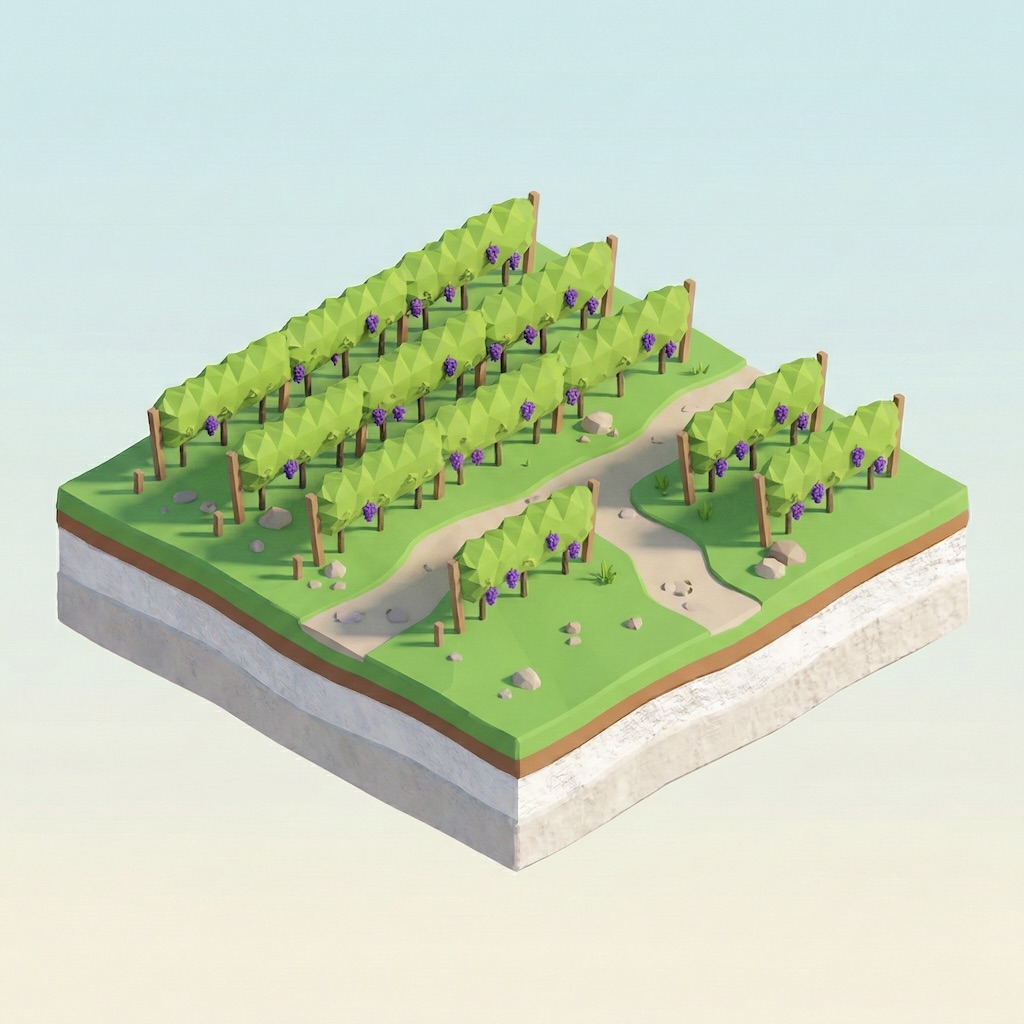
Grande Montagne de Reims is the historic core of the wider Montagne de Reims subregion and by far its densest concentration of top-tier terroir: nine of Champagne's seventeen Grand Cru villages sit within its 24-commune footprint, among them Ambonnay, Bouzy, Verzenay, Verzy, Mailly-Champagne, Sillery, Puisieulx, Beaumont-sur-Vesle and Louvois. The area splits into distinct pockets by exposure. On the south-facing slopes around Ambonnay, Bouzy and Louvois, fuller sun gives a rounder, more generous Pinot Noir. On the north and north-east flank through Verzenay, Verzy, Mailly-Champagne, Beaumont-sur-Vesle, Sillery and Puisieulx, the same grape ripens more slowly under cooler exposure and comes in leaner and more structured, the backbone fruit houses reserve for their best blends. A third pocket on the east side, around Villers-Marmery, Trépail, Vaudemange and Billy-le-Grand, catches the same south-east-facing chalk exposure as the Côte des Blancs across the valley and grows mostly Chardonnay instead; these four villages were only promoted to Premier Cru status in 1985. Averaged across all 24 communes Pinot Noir still leads, but that average flattens what is really three distinct sub-terroirs held together in one appellation. Long before Champagne meant sparkling wine, this ridge already had a court reputation of its own. Through the 17th and 18th centuries the still red wines and vin gris of Château de Sillery, made from vines the Brûlart de Sillery family held in Sillery and neighbouring Verzenay, Ludes and Mailly, were served at Versailles and ranked alongside Aÿ as the most sought-after wines in France, a name Sillery carried for two centuries before it became known instead for Grand Cru Chardonnay-Pinot blends. The ridge's height brought a different kind of attention in the 20th century: the Moulin de Verzenay, a windmill built on Mont Bœuf in 1818, was turned into a French military observation post through the 1914-18 war, its underground galleries visited in 1917 by King Victor-Emmanuel III of Italy and President Poincaré, and it served again as a US Army lookout in 1944. Verzenay's own vines paid the price for that vantage point: of roughly 500 hectares planted before the war, only about 75 remained in production once the fighting stopped. The windmill still stands over the vines, maintained by the house of Mumm since 1972.
Subregion: Montagne de Reims
View on the map →The crus
Pinot Noir on the deepest chalk.
Beaumont-sur-VesleGrand CruThe Montagne's quietest Grand Cru.
Billy-le-GrandPremier CruSmallest of the Perle Blanche.
BouzyGrand CruThe home of Bouzy Rouge.
Chigny-les-RosesPremier CruThe Ace of Spades village.
CormontreuilPremier CruA Premier Cru in the suburbs.
LouvoisGrand CruThe Sun King's Grand Cru.
LudesPremier CruWhere the next-generation grower lives.
Mailly-ChampagneGrand CruChampagne's cooperative Grand Cru.
MontbréPremier CruA small Pinot-Meunier hillside.
PuisieulxGrand CruThe Grand Cru on the plain.
Rilly-la-MontagnePremier CruWhere oak-aged grower Champagne began.
SilleryGrand CruOnce Champagne's most famous wine.
TaissyPremier CruAn industrial Champagne address.
Tauxières-MutryPremier CruThe other 99%.
TrépailPremier CruChardonnay on the wrong mountain.
Trois-PuitsPremier CruA quiet southern Reims village.
VaudemangePremier CruA pearl of the Perle Blanche.
VerzenayGrand CruThe cool face of Pinot Noir.
VerzyGrand CruPinot Noir below the twisted forest.
Villers-AllerandPremier CruA Meunier-led hillside.
Villers-MarmeryPremier CruAlmost-pure Chardonnay on the Pinot mountain.
Villages
- AmbonnayGrand Cru
- Beaumont-sur-VesleGrand Cru
- Billy-le-GrandPremier Cru
- BouzyGrand Cru
- Chigny-les-RosesPremier Cru
- CormontreuilPremier Cru
- Fontaine-sur-Aÿ
- Germaine
- LouvoisGrand Cru
- LudesPremier Cru
- Mailly-ChampagneGrand Cru
- MontbréPremier Cru
- PuisieulxGrand Cru
- Rilly-la-MontagnePremier Cru
- SilleryGrand Cru
- TaissyPremier Cru
- Tauxières-MutryPremier Cru
- TrépailPremier Cru
- Trois-PuitsPremier Cru
- VaudemangePremier Cru
- VerzenayGrand Cru
- VerzyGrand Cru
- Villers-AllerandPremier Cru
- Villers-MarmeryPremier Cru
Go deeper with the Parcelles app
Terroir, vintages since 1950 and the story behind every champagne — on the interactive map of every parcel in Champagne.