 Parcelles
Vallée de la Marne
Meunier's frost-edged river valley.
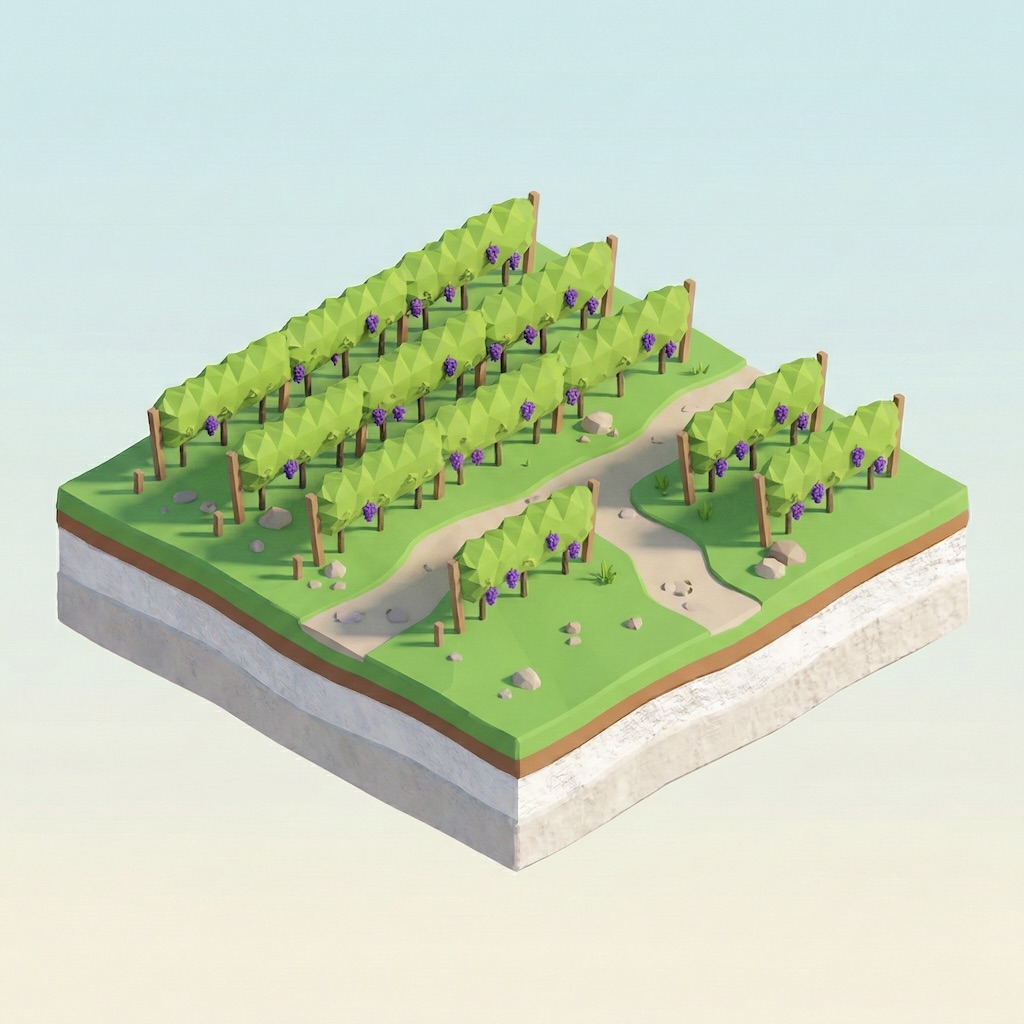
The Vallée de la Marne follows the river west from Épernay toward Château-Thierry, and it is the only subregion in Champagne where Pinot Meunier is the dominant grape. The valley floor is more frost-prone than the slopes above it, with cold air pooling along the river on still spring nights, and Meunier's late budbreak is the practical answer to that risk. Soils shift as the valley widens: chalk and marl on the eastern slopes near Épernay, then heavier clay and silt as you move west, which is part of why the wines vary more in style here than in any other subregion. This is where the historical thread of sparkling Champagne is at its strongest. The Benedictine abbey at Hautvillers, perched on the north bank just east of Épernay, was the working monastery of Dom Pérignon, the cellarmaster whose late-17th-century work on blending and clarification helped shape the wine the region eventually became famous for. The legend that he invented Champagne is more myth than fact, since sparkling wine was already being made elsewhere, but his methods and the abbey itself sit at the centre of how the region tells its own story.
The crus
A forgotten star.
AÿGrand CruA royal hill of Pinot Noir.
BisseuilPremier CruChardonnay between two Pinot villages.
ChampillonPremier CruThe hilltop view of Champagne.
CumièresPremier CruWhere Champagne becomes red.
DizyPremier CruWhere the parcel revolution started.
HautvillersPremier CruWhere the myth was made.
Mareuil-sur-AÿPremier CruChampagne's first single vineyard.
MutignyPremier CruPinot from above the Marne.
PierryPremier CruThe other monk's village.
Tours-sur-MarneGrand CruPinot Noir along the Marne.
Villages
- Avenay-Val-d'OrPremier Cru
- AÿGrand Cru
- Azy-sur-Marne
- Barzy-sur-Marne
- Baslieux-sous-Châtillon
- Baulne-en-Brie
- Belval-sous-Châtillon
- Bézu-le-Guéry
- Binson-et-Orquigny
- BisseuilPremier Cru
- Blesmes
- Bonneil
- Boursault
- Brasles
- Brugny-Vaudancourt
- Celles-lès-Condé
- ChampillonPremier Cru
- Champlat-et-Boujacourt
- Champvoisy
- Charly-sur-Marne
- Chartèves
- Château-Thierry
- Châtillon-sur-Marne
- Chavot-Courcourt
- Chézy-sur-Marne
- Chierry
- Citry
- Connigis
- Cormoyeux
- Courtemont-Varennes
- Courthiézy
- Crézancy
- Crouttes-sur-Marne
- Cuchery
- Cuisles
- CumièresPremier Cru
- Damery
- DizyPremier Cru
- Domptin
- Dormans
- Épernay
- Essômes-sur-Marne
- Étampes-sur-Marne
- Festigny
- Fleury-la-Rivière
- Fossoy
- Gland
- HautvillersPremier Cru
- Igny-Comblizy
- Jaulgonne
- Jonquery
- La Chapelle-Monthodon
- La Neuville-aux-Larris
- La Ville-sous-Orbais
- Le Breuil
- Leuvrigny
- Mancy
- Mardeuil
- Mareuil-le-Port
- Mareuil-sur-AÿPremier Cru
- Mézy-Moulins
- Mont-Saint-Père
- Monthelon
- Monthurel
- Montreuil-aux-Lions
- Morangis
- Moslins
- Moussy
- MutignyPremier Cru
- Nanteuil-sur-Marne
- Nesle-le-Repons
- Nesles-la-Montagne
- Nogent-l'Artaud
- Nogentel
- Œuilly
- Olizy
- Orbais-l'Abbaye
- Passy-Grigny
- Passy-sur-Marne
- Pavant
- PierryPremier Cru
- Reuil
- Reuilly-Sauvigny
- Romeny-sur-Marne
- Romery
- Romigny
- Saâcy-sur-Marne
- Saint-Agnan
- Saint-Eugène
- Saint-Martin-d'Ablois
- Sainte-Gemme
- Saulchery
- Tours-sur-MarneGrand Cru
- Trélou-sur-Marne
- Troissy
- Vandières
- Vauciennes
- Venteuil
- Verneuil
- Villers-sous-Châtillon
- Villiers-Saint-Denis
- Vinay
- Vincelles
Go deeper with the Parcelles app
Terroir, vintages since 1950 and the story behind every champagne — on the interactive map of every parcel in Champagne.