 Parcelles
Massif de Saint-Thierry
Meunier on a sandy plateau.
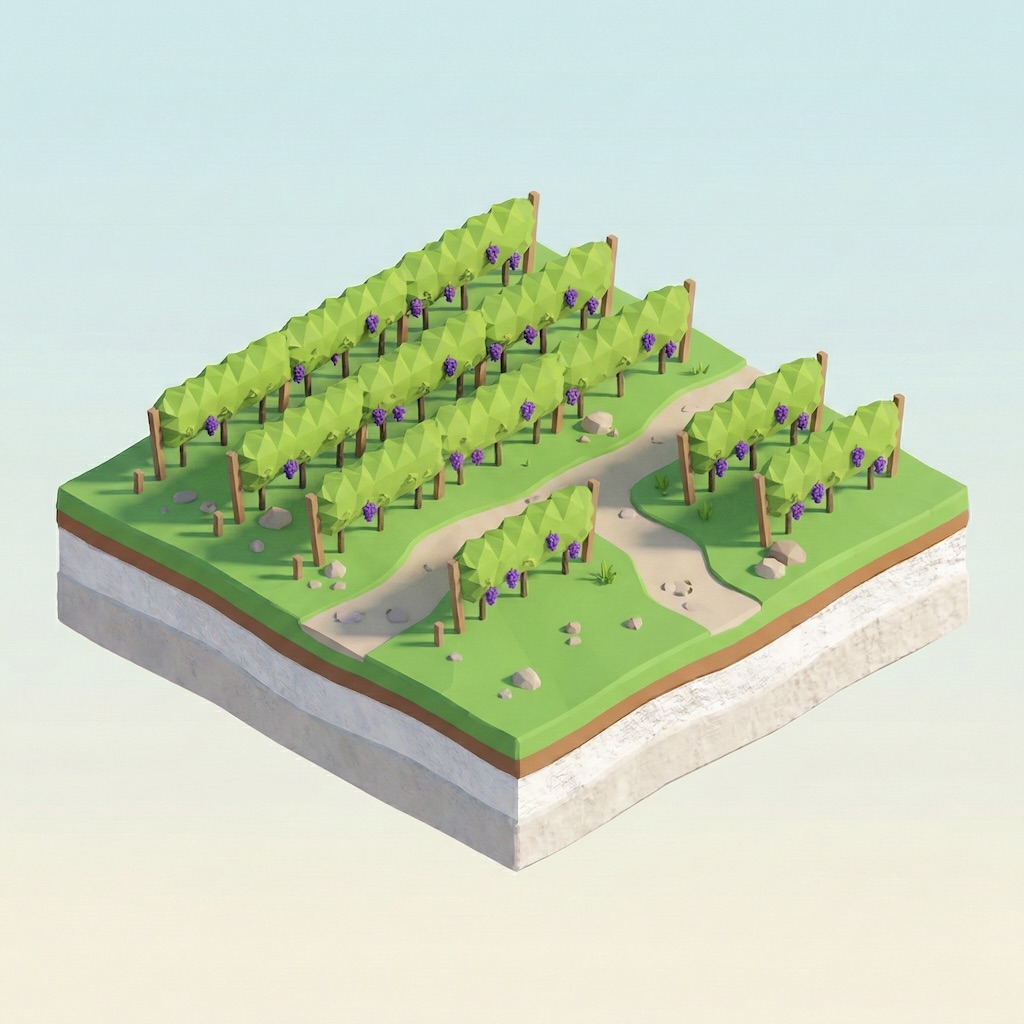
The Massif de Saint-Thierry is a separate plateau north of Reims, cut off from the main Montagne de Reims ridge by the valley of the Vesle. Geologically it is its own formation: a layer of Tertiary marine sand sits over the Cretaceous chalk and marl that underlies the rest of Champagne, giving well-drained, sandy-clay soils that warm faster in spring than the chalk slopes to the south. The massif forms a rough V shape, its point a promontory looking toward Reims, with vines on gentle, mostly south and southeast-facing slopes around a wooded centre, and it holds some of the northernmost vineyards in the whole Champagne appellation. Those lighter, sandier soils favour Meunier over the deep chalk that anchors Pinot Noir on the main Montagne ridge, and the massif's plantings run majority Meunier, making it one of the few places in Champagne where Meunier, not Pinot Noir or Chardonnay, is the leading grape. The area takes its name from the village of Saint-Thierry, seat of a Benedictine abbey founded around 500 by Theodoric (Thierry) of Mont d'Hor and originally dedicated to Saint Bartholomew. It was rededicated after Archbishop Adalbero of Reims transferred Thierry's own relics there around 974, which is where the abbey, the village and the massif get their present name. Its best-documented abbot is William of Saint-Thierry, elected in 1119, a theologian and close friend of Bernard of Clairvaux who wrote influential works on contemplation and mystical union before resigning in 1135 to join the Cistercians at Signy. The abbey was suppressed in 1695 under Louis XIV and its buildings were largely razed in 1777, leaving only the 12th-century chapter house standing. Monastic life returned in 1968, when Benedictine nuns resettled the site, and the abbey remains an active convent today.
Subregion: Montagne de Reims
View on the map →The crus
Villages
- BezannesPremier Cru
- Bouilly
- Brimont
- Cauroy-lès-Hermonville
- Châlons-sur-Vesle
- Chenay
- Cormicy
- Hermonville
- Merfy
- Montigny-sur-Vesle
- Pévy
- Pouillon
- Prouilly
- Saint-Thierry
- Thil
- Trigny
- Villers-Franqueux
Go deeper with the Parcelles app
Terroir, vintages since 1950 and the story behind every champagne — on the interactive map of every parcel in Champagne.