 Parcelles
Vallée de la Marne Rive Gauche
Meunier's densest stretch of the valley.
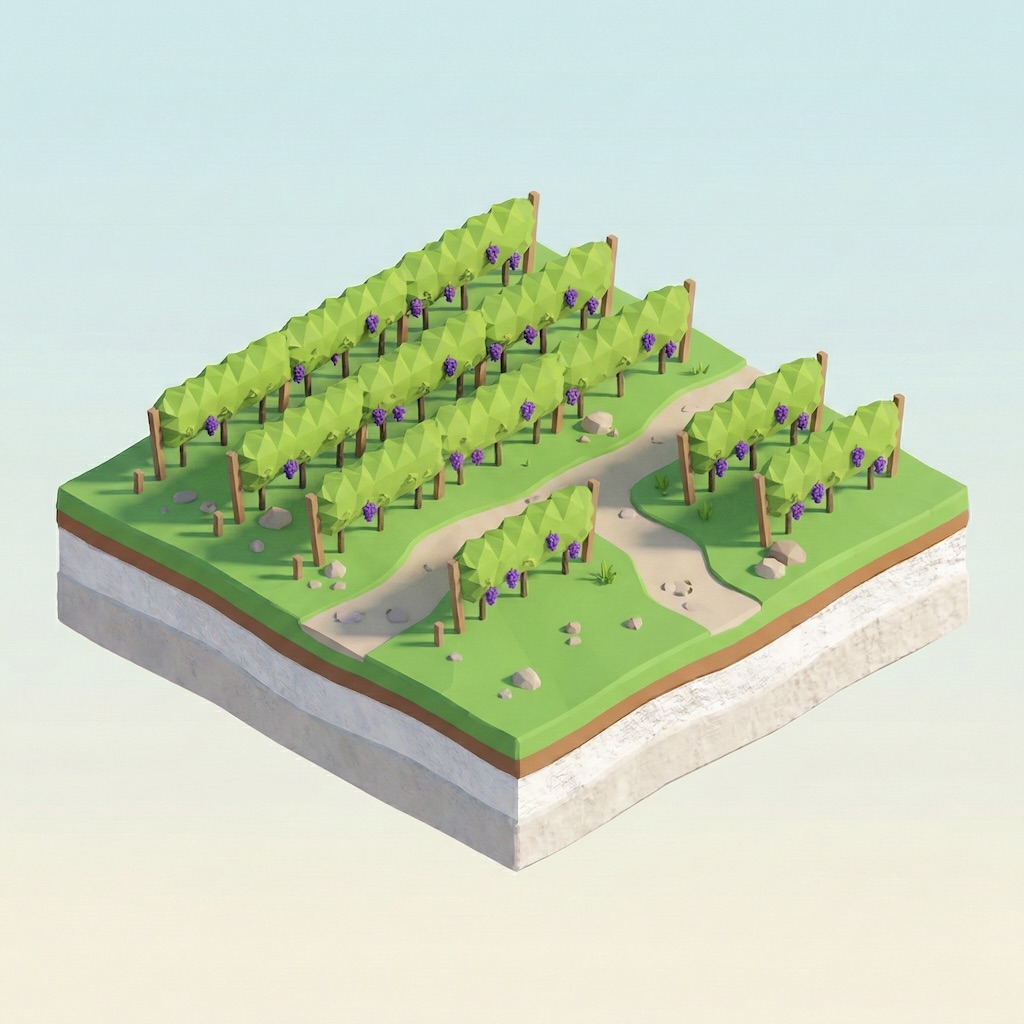
Vallée de la Marne Rive Gauche runs along the south bank of the Marne, opposite Rive Droite, from Mardeuil at the edge of Épernay west to Dormans. Its fifteen villages, among them Boursault, Mareuil-le-Port, Troissy and Orbais-l'Abbaye (the last set back from the river in the Surmelin valley), sit below slopes that face north rather than south, since the river runs east to west and the left bank looks across the water toward the sun-favoured right bank. Cold air draining off the plateau also collects along this bank on still nights, sharpening the frost risk the whole Vallée de la Marne is known for. The soils here sit at the valley's heavier, more clay-rich end: calcareous clay and marl close to Épernay giving way further west to clay, sand and silt, with chalk lying deeper underground than on the Côte des Blancs or the Montagne de Reims. Pinot Meunier, whose late budbreak and tolerance of cooler, damper ground suit this terrain, dominates by the widest margin of either bank of the valley, among the highest Meunier shares anywhere in Champagne. The subregion's place names lead back to one of Champagne's older religious houses. Saint Réole, bishop of Reims, founded a Benedictine abbey in the late 7th century, dedicating it to Saints Peter and Paul and staffing it with monks brought from the abbey of Rebais; the village that grew up around it eventually took the abbey's name, becoming Orbais-l'Abbaye. The abbey church standing there today was largely rebuilt around 1200, in the early Gothic style, and Jean d'Orbais, born in the village around 1175, is traditionally credited with its design. He went on to become the first of the four master builders of Reims Cathedral, overseeing the laying of its first stone in 1211 and directing construction of the apse, choir and southern transept until 1228; he and the other three architects are commemorated together in the cathedral's labyrinth mosaic. His documented role at Reims is well established, though his personal authorship of the Orbais church itself is treated more cautiously by historians, since the abbey's medieval archives were destroyed.
Subregion: Vallée de la Marne
View on the map →Villages
- Boursault
- Courthiézy
- Dormans
- Festigny
- Igny-Comblizy
- La Ville-sous-Orbais
- Le Breuil
- Leuvrigny
- Mardeuil
- Mareuil-le-Port
- Nesle-le-Repons
- Œuilly
- Orbais-l'Abbaye
- Troissy
- Vauciennes
Go deeper with the Parcelles app
Terroir, vintages since 1950 and the story behind every champagne — on the interactive map of every parcel in Champagne.