 Parcelles
Côteaux Sud d'Épernay
Chardonnay's foothold above Épernay.
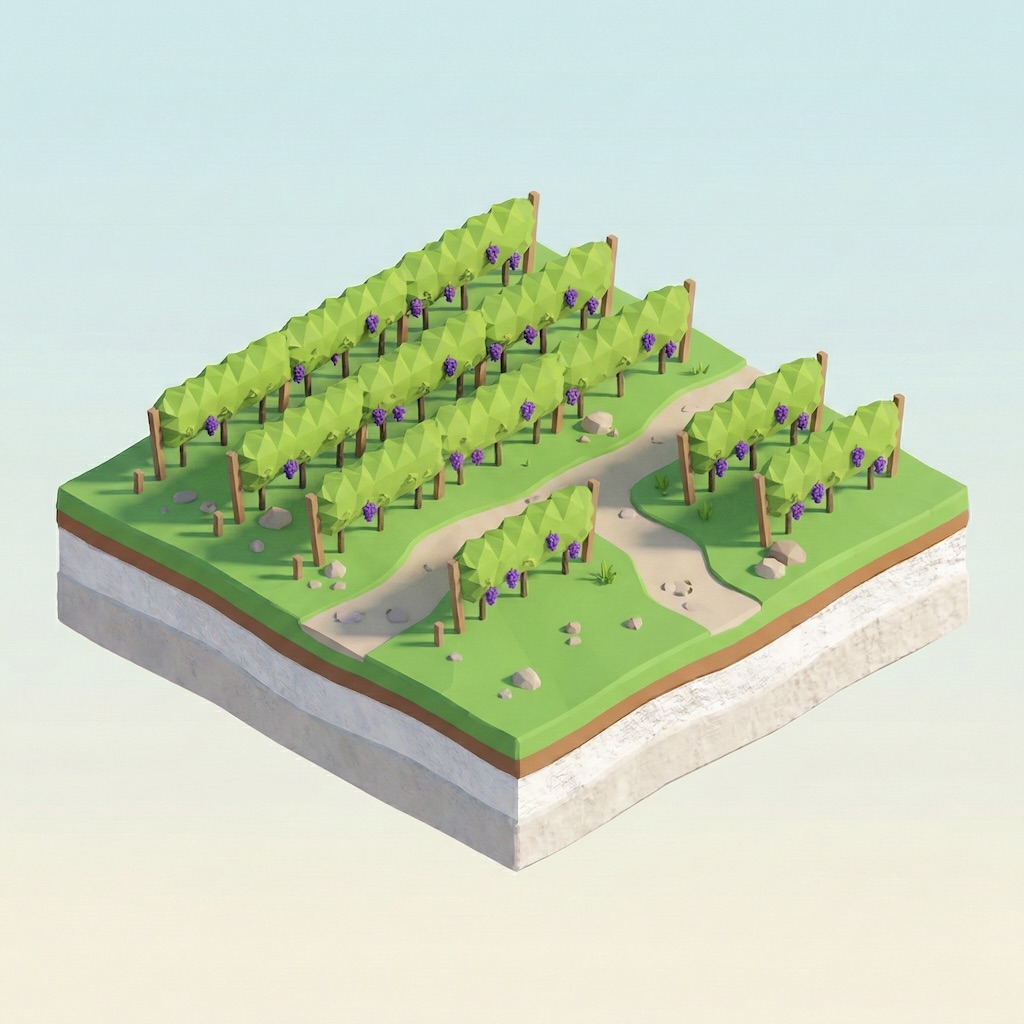
Côteaux Sud d'Épernay covers the low chalk hills immediately south of the town, where the Vallée de la Marne widens and begins to turn toward the Côte des Blancs. Chalk remains the common base across its 11 villages, but it surfaces under a patchwork of overlying material that shifts from village to village: alluvial sand near Mancy and Monthelon, harder limestone around Vinay and Saint-Martin-d'Ablois, heavier clay-marl mixes around Pierry and Moussy. Toward Mancy and Monthelon the ground effectively backs onto the same chalk massif that carries the Côte des Blancs further south, and that geological continuity, more than any change in exposure, is what pulls the grape mix here toward more Chardonnay than the Meunier-heavy valley floor further west. Pierry is the area's only Premier Cru; the other ten villages are rated autre cru. Because this UMC area includes Épernay itself, it also takes in the Avenue de Champagne, the town's central boulevard and the closest thing the region has to a corporate high street. Cellars were first dug into the chalk here in the late seventeenth century, and by the following century the avenue had become the preferred address for Épernay's Champagne traders; the arrival of the railway in the nineteenth century then brought the boom that filled it with grand maisons. Moët & Chandon, founded in Épernay in 1743, built its headquarters here and now holds around 28 kilometres of underground galleries beneath the avenue; Perrier-Jouët, Mercier and others followed. The avenue and its cellars were inscribed on UNESCO's World Heritage List in 2015. A few kilometres south, in the village of Pierry, the Château de Pierry, built around 1734 for the count-bishop of Châlons-en-Champagne, was home to Brother Jean Oudart, a Benedictine cellarer and contemporary of Dom Pérignon who applied the same emerging winemaking methods to the wines produced there.
Subregion: Vallée de la Marne
View on the map →The crus
Villages
- Brugny-Vaudancourt
- Chavot-Courcourt
- Épernay
- Mancy
- Monthelon
- Morangis
- Moslins
- Moussy
- PierryPremier Cru
- Saint-Martin-d'Ablois
- Vinay
Go deeper with the Parcelles app
Terroir, vintages since 1950 and the story behind every champagne — on the interactive map of every parcel in Champagne.