 Parcelles
Côte des Blancs
Champagne's chalk heartland.
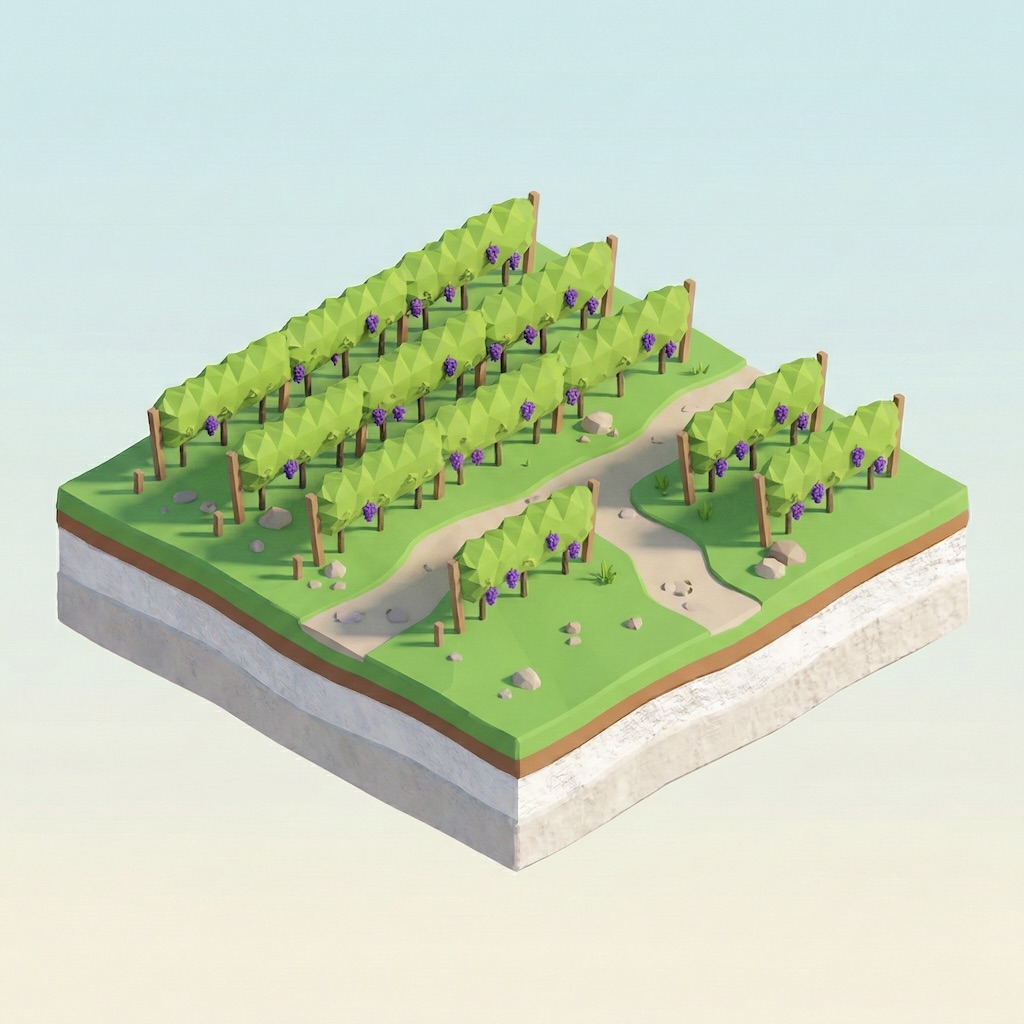
Côte des Blancs is the east-facing escarpment running south from Épernay, and it is the one place in Champagne where Chardonnay isn't a supporting grape but nearly the only one. The plantings are almost entirely white, growing on some of the purest belemnite chalk in the region, laid down in the Cretaceous when this part of France sat under a shallow sea. The chalk holds water like a sponge in dry years and drains coldly in wet ones, and the latitude here, around 49°N at the northern edge of viable winegrowing in Europe, ensures slow ripening and high natural acidity. That combination is why the wines keep a vertical, mineral spine that other subregions struggle to match. The Chardonnay monoculture is more recent than people assume. Through most of the 19th century the area grew a wider mix of varieties, including older white grapes that have all but disappeared from Champagne today. Phylloxera reached the region in the 1890s and forced a wholesale replant, and as growers chose what to put back in the ground, Chardonnay's reliability on chalk and its affinity for the slow, cool ripening here pushed it to dominance. The blanc de blancs identity that the area is now built on, and the prestige that comes with it, only hardened in the early 20th century.
The crus
Where Champagne goes to school.
Bergères-lès-VertusPremier CruThe southern bookend of the Côte des Blancs.
ChouillyGrand CruThe northern gate of the Côte des Blancs.
CramantGrand CruChampagne's gentlest Grand Cru.
CuisPremier CruThe cool north of the Côte des Blancs.
GrauvesPremier CruThe valley behind the cordon.
Le Mesnil-sur-OgerGrand CruChardonnay built to age.
OgerGrand CruThe Grand Cru of 1985.
OiryGrand CruThe smallest Chardonnay Grand Cru.
Val-des-MaraisPremier CruThe southern edge of the Côte des Blancs.
VertusPremier CruChampagne's biggest Chardonnay village.
Villeneuve-Renneville-ChevignyPremier CruA Chardonnay reservoir for the houses.
VoipreuxPremier CruThe smaller Chardonnay sister.
Villages
- AvizeGrand Cru
- Bergères-lès-VertusPremier Cru
- ChouillyGrand Cru
- CramantGrand Cru
- CuisPremier Cru
- GrauvesPremier Cru
- Le Mesnil-sur-OgerGrand Cru
- OgerGrand Cru
- OiryGrand Cru
- Val-des-MaraisPremier Cru
- VertusPremier Cru
- Villeneuve-Renneville-ChevignyPremier Cru
- VoipreuxPremier Cru
Go deeper with the Parcelles app
Terroir, vintages since 1950 and the story behind every champagne — on the interactive map of every parcel in Champagne.