 Parcelles
Côte de Sézanne
Clay-tempered chalk in the southern sun.
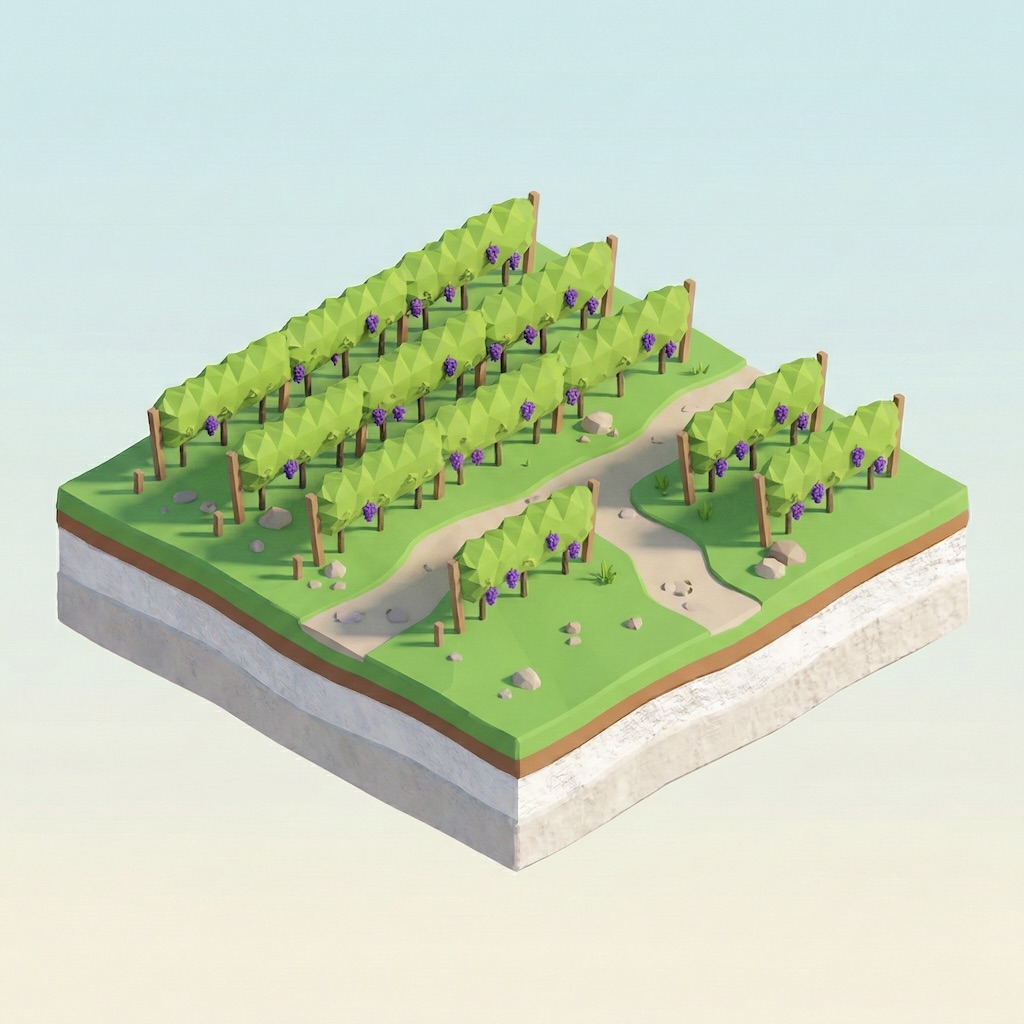
The Côte de Sézanne is a south-facing chalk slope about 20 kilometres southwest of Épernay, and like its better-known neighbour the Côte des Blancs it is largely planted to Chardonnay, with whites accounting for around three-quarters of the vineyard area. The chalk here carries more clay overlay than on the Côte des Blancs, and the southern exposure brings noticeably more sun, so the grapes ripen earlier and the wines tend to be rounder and more open in their youth than the leaner, more mineral whites a few hours' drive to the north. The Côte de Sézanne came to prominence relatively late. Through most of the 19th and early 20th centuries it was a quiet patchwork of mixed agriculture rather than a Champagne stronghold, and large-scale planting only took off in the second half of the 20th century as demand grew and growers looked for parcels that could ripen reliably even in cooler vintages. That late development is part of why it lacks the grand cru hierarchy and household-name producers of the older subregions, and why much of its fruit still flows into the blends of houses based further north.
The crus
Villages
- Allemant
- Barbonne-Fayel
- Baye
- Beaunay
- Bergères-sous-Montmirail
- Bethon
- Broussy-le-Grand
- Broyes
- Chantemerle
- Coizard-Joches
- Congy
- Courjeonnet
- Étoges
- ÉtréchyPremier Cru
- Fèrebrianges
- Fontaine-Denis-Nuisy
- Givry-lès-Loisy
- La Celle-sous-Chantemerle
- Loisy-en-Brie
- Mondement-Montgivroux
- Montgenost
- Oyes
- Saudoy
- Sézanne
- Soulières
- Talus-Saint-Prix
- Vert-Toulon
- Villenauxe-la-Grande
- Villevenard
- Vindey
Go deeper with the Parcelles app
Terroir, vintages since 1950 and the story behind every champagne — on the interactive map of every parcel in Champagne.