 Parcelles
Terroir de Condé
Champagne's smallest pocket of Meunier.
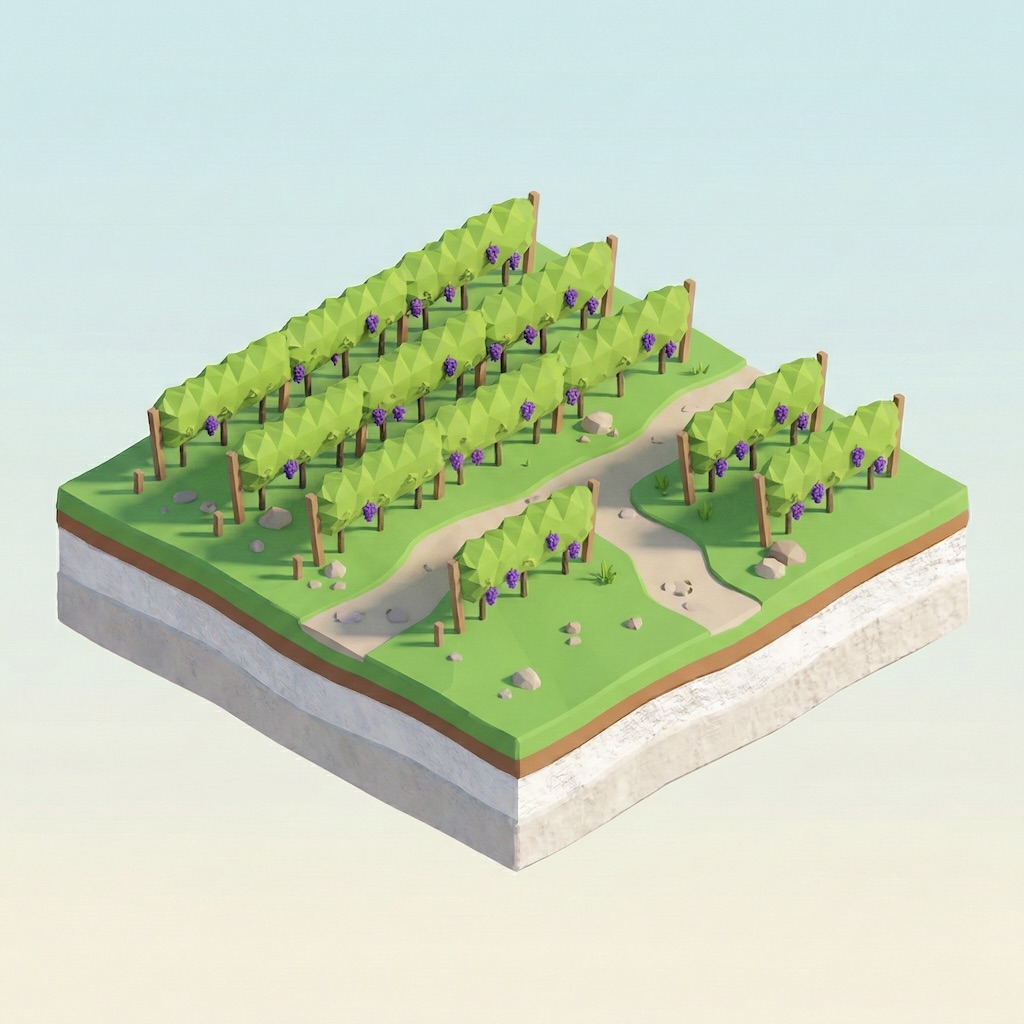
Terroir de Condé is the smallest of Champagne's seventeen UMC terroirs by village count, just four communes covering well under a thousand hectares of vines at the western tip of the Vallée de la Marne, in the Aisne département near the border with the Marne. Three villages sit directly on the Marne; Baulne-en-Brie lies a short distance south in the valley of the Surmelin, a tributary stream. None holds Grand Cru or Premier Cru status, all four are classified as autres crus. The soils are the clay, marl, and clay-limestone typical of the western valley, heavier and less chalky than the Côte des Blancs further east, and Pinot Meunier dominates even more than the regional norm. It is a modest, working corner of the appellation, closer to grower cooperative territory than grand maison country. The terroir borrows its name from Condé-en-Brie, a small town a few kilometres south on the Surmelin known for its Renaissance-era château, but Condé-en-Brie itself is not one of the four member villages; it lends only its name to the area. The clearest documented moment in the terroir's history belongs to Trélou-sur-Marne: on 6 August 1890, phylloxera was identified there for the first time in Champagne, at Montcouvent, a hamlet of Chassins, the discovery that opened the region's own phylloxera crisis a few years after the pest had already devastated vineyards further south and west in France. A commemorative cross still marks the site today. Beyond that one well-documented episode, the four villages of Terroir de Condé remain quiet and little written about, worked by a small number of grower-producers and cooperatives rather than any well-known house.
Subregion: Vallée de la Marne
View on the map →Villages
Go deeper with the Parcelles app
Terroir, vintages since 1950 and the story behind every champagne — on the interactive map of every parcel in Champagne.